
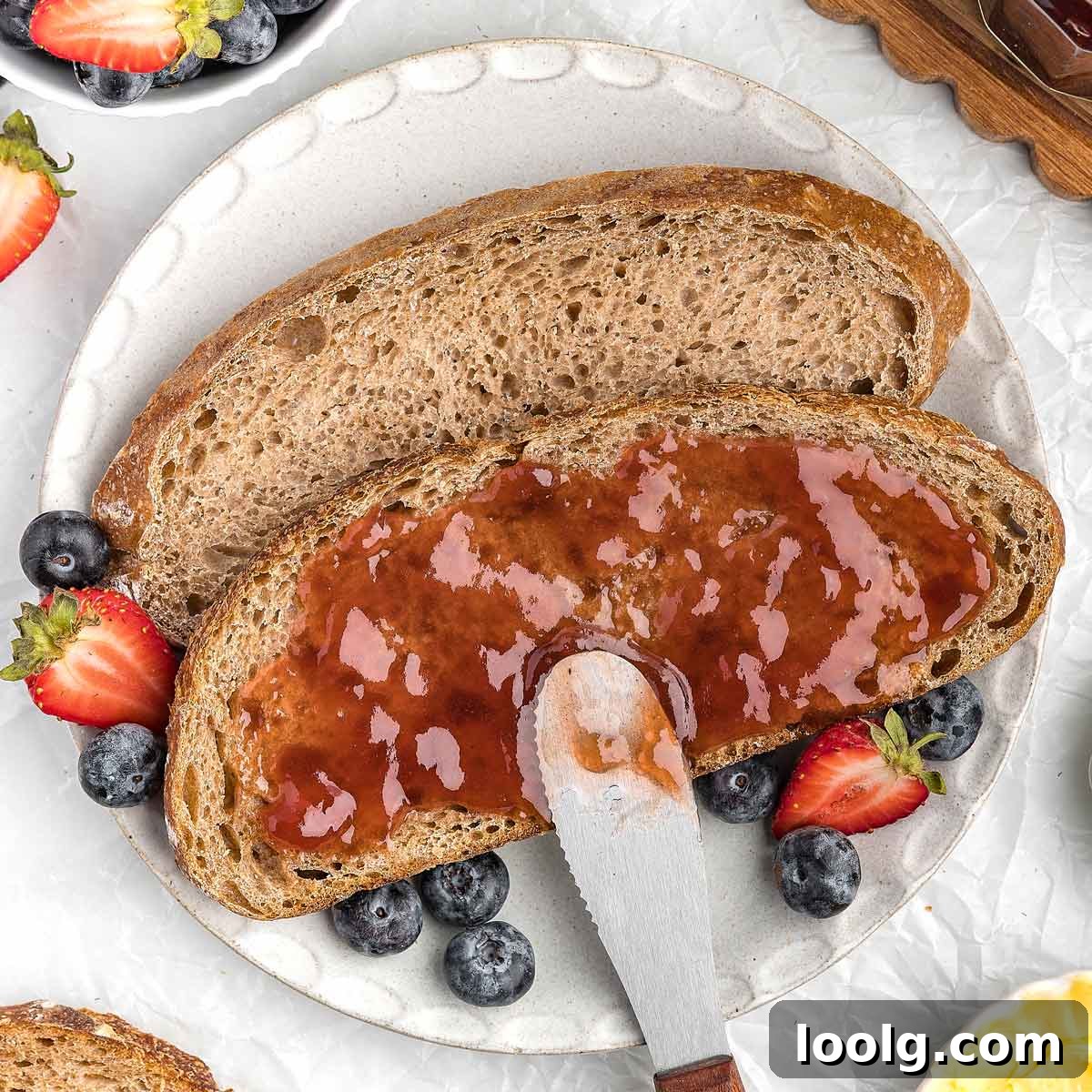
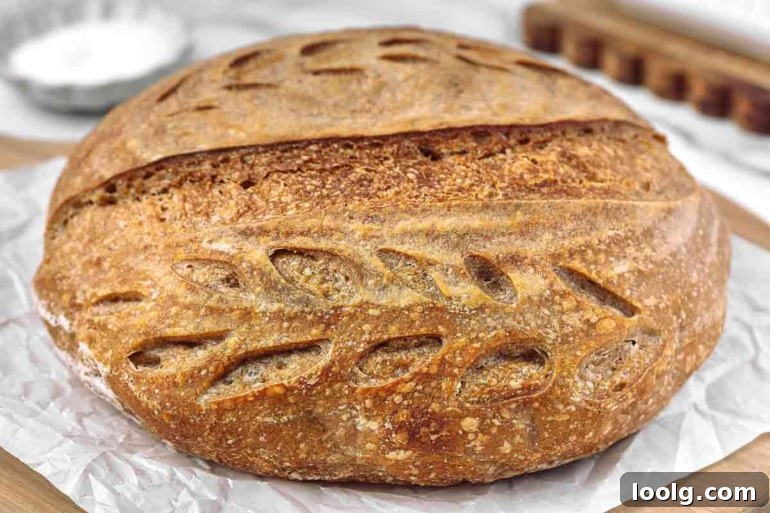
Whole wheat sourdough can be soft and well-structured when balanced correctly. This 50/50 loaf uses equal parts bread flour and whole wheat flour to deliver robust whole-wheat flavor without an overly dense crumb. The dough is higher hydration, so it should feel soft and slightly tacky while still developing enough strength to hold its shape.
The method adds water gradually so you can stop when the dough reaches the right consistency for your flour and environment. If you prefer to begin with a simpler sourdough loaf, try an overnight white sourdough. For a softer crumb with honey and oats, consider a honey oat variation.
What’s to Love
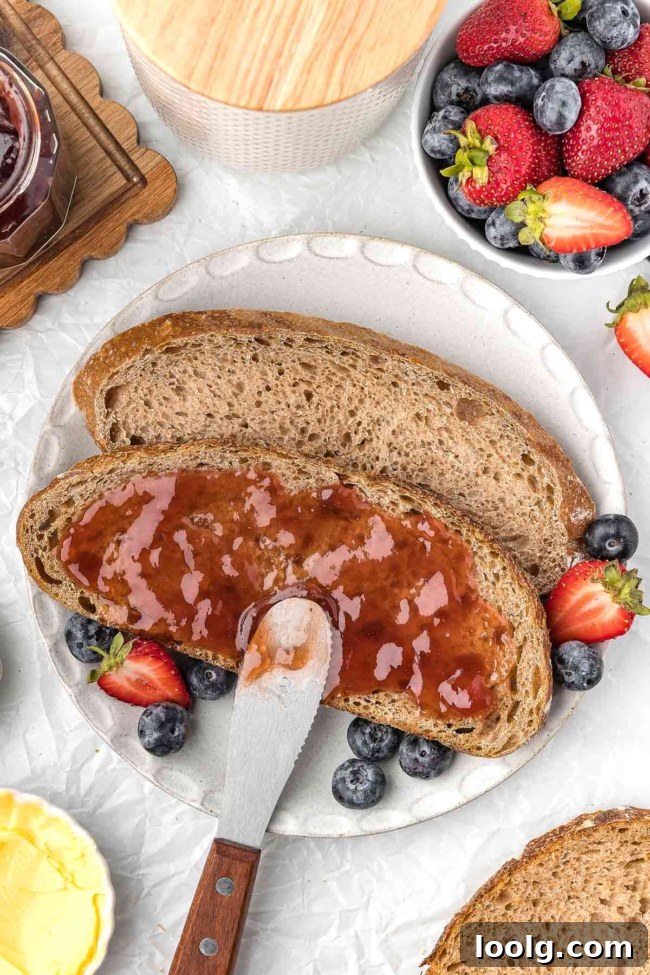
- Balanced 50/50 loaf – equal bread and whole wheat flours give strong flavor without excessive density.
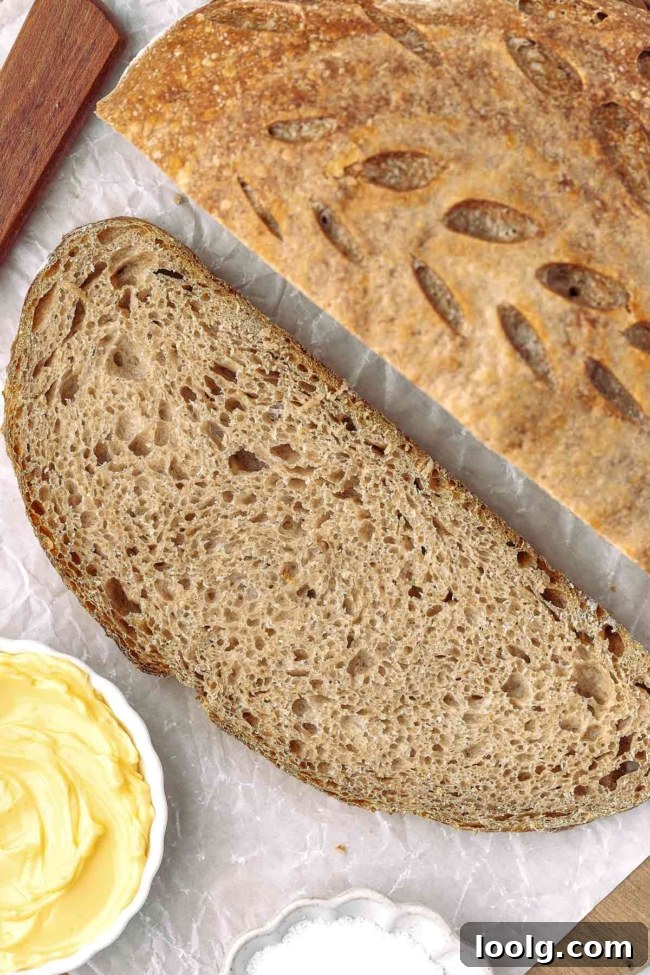
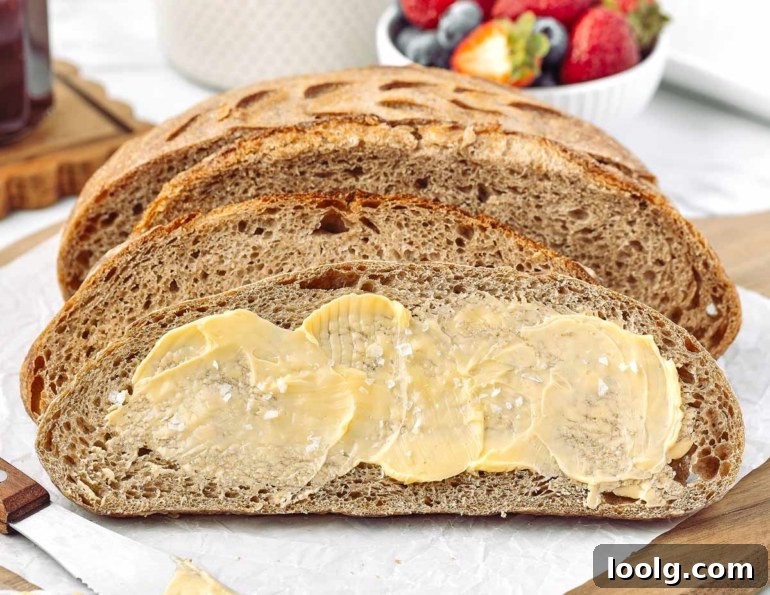
- Soft, open crumb – higher hydration yields a tender interior while preserving structure.
- Adjustable hydration – add the reserved water slowly and stop when the dough feels right.
- Convenient overnight cold proof – shape in the evening and bake the next morning.
Ingredients
Below are notes on key ingredients and their roles. Full measurements and step-by-step instructions follow in the recipe section.
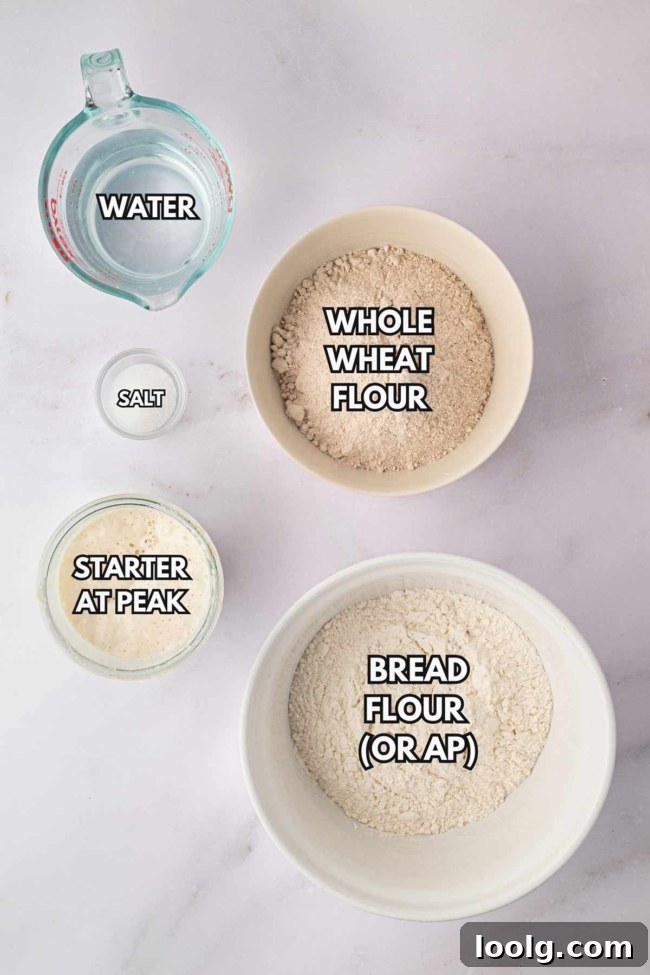
- Sourdough starter / levain – use a ripe, active 100% hydration starter. Build a levain by feeding a small portion of starter with flour and water, then let it become bubbly and near its peak (typically 3–5 hours depending on temperature and starter activity).
- Bread flour – a stronger bread flour (tested with King Arthur Bread Flour) helps support the whole wheat and higher hydration.
- All-purpose flour – stiffer all-purpose flours with higher protein may substitute but behave differently; adjust water as needed.
- Whole wheat flour – whole wheat contributes flavor and absorbs more water; dough can ferment faster than an all-white dough.
- Water – start with 350 g in the autolyse and add up to an additional 35 g gradually if needed. Total water tested between 370–385 g; full 385 g yields approx. 87% hydration but is not required for all flours or environments.
How to Make It — Overview
This overview explains the main stages. The full recipe with exact measurements and detailed steps appears below.
Prepare the levain – combine 25 g ripe starter with 25 g bread flour, 25 g whole wheat flour and 50 g water. Let it rise until bubbly and active (about 3–5 hours).
Autolyse – mix 225 g bread flour, 225 g whole wheat flour and 350 g water until no dry spots remain. Cover and rest for 30 minutes to hydrate the flour and begin gluten development.
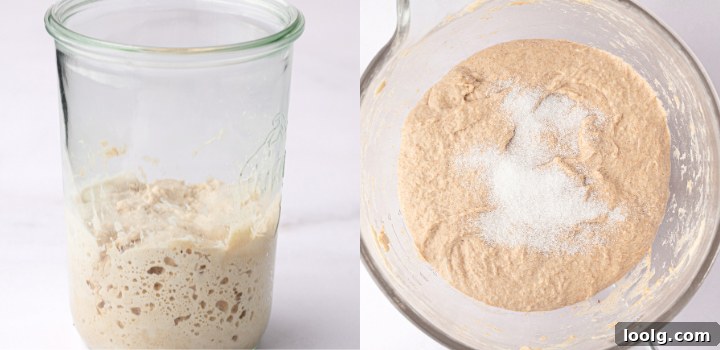
Mix the dough – incorporate 125 g ripe levain into the autolysed dough by hand or with a stand mixer. Sprinkle in 11 g fine sea salt and add additional water up to 35 g gradually, only as needed. The dough should be soft, cohesive and tacky but still able to hold together. It may look loose or messy when extra water is added; continue working it and allow the gluten to reorganize and strengthen.
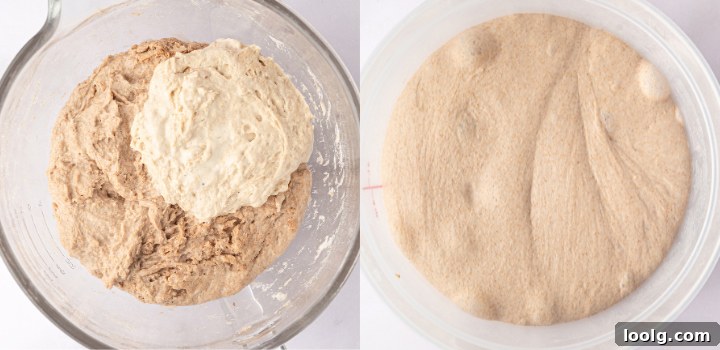
Stretch-and-folds – perform three sets about 30 minutes apart. Gently stretch and fold each side of the dough; rotate and repeat. Avoid aggressive handling once bubbles and aeration appear. If the dough still feels weak after three sets, add a fourth.
Finish bulk fermentation – continue until the dough looks aerated, puffy and pillowy with visible bubbles and a gentle jiggle when moved. Do not wait for a full doubling; rely on visual and tactile cues.
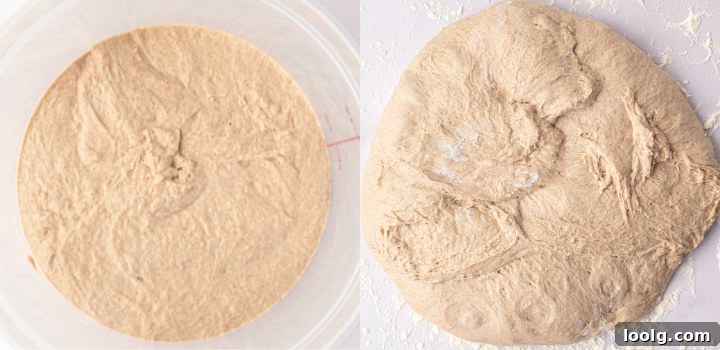
Preshape – turn the dough onto a lightly floured surface and form a loose round to develop gentle surface tension. Rest uncovered about 20 minutes; this preshape helps create a taller, more structured boule.
Shape and cold proof – shape into a tight boule without degassing, place seam-side up in a well-floured 9–10 inch (23–25 cm) banneton, cover and refrigerate for 10–14 hours.
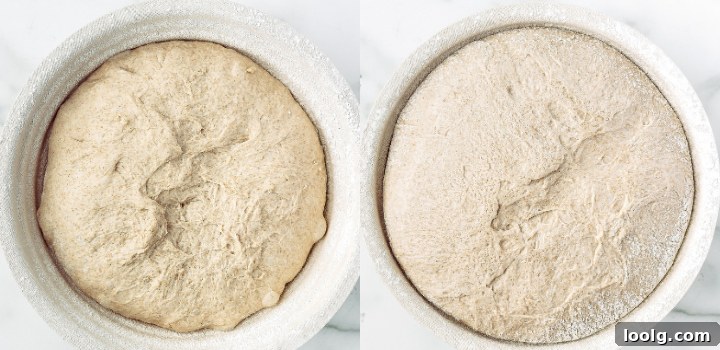
Bake – preheat a covered Dutch oven to 475°F (245°C) for ~30 minutes. Turn the cold loaf onto parchment, score, and bake covered for 25 minutes. Check the internal temperature in the center; once it reaches ~190°F (88°C) or higher, remove the lid, reduce oven temperature to 450°F (230°C), and finish baking uncovered about 20–25 minutes more until the loaf is deeply golden and the interior reaches 205–210°F (96–99°C).
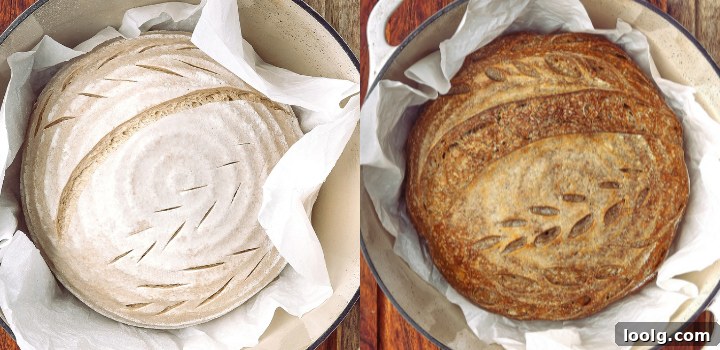
Cool completely – allow at least two hours before slicing to finish setting the crumb. Slicing too soon can make the crumb gummy.
Tips for Success
- Protect the bottom crust – if your oven browns quickly on the bottom, place an empty baking sheet on the rack below the Dutch oven to buffer heat.
- Extra steam – the covered Dutch oven traps steam effectively; if desired and safe for your cookware, adding a few ice cubes beside the parchment can increase steam early in the bake.
- Even browning – for the final minutes, transfer the loaf to an oven-safe wire rack set over a baking sheet to brown more evenly.
Troubleshooting
Sticky dough: tackiness is expected at this hydration level. Avoid adding flour unless necessary, as extra flour will tighten the crumb. With time and folds the dough will become smoother.
Dough looks like it’s falling apart after adding water: this is normal; continue working and folding and the gluten will rebind the mass.
Dough becomes very loose: stop adding water. The extra 35 g is a maximum; use only what the dough needs to be cohesive and manageable.
Still weak after three folds: perform a fourth set. Let the dough guide you.
When is bulk fermentation done? look for visible expansion, bubbles, a pillowy texture and a gentle jiggle rather than relying on a doubling in volume. Whole wheat ferments faster; follow the dough cues.
Can I skip the preshape? you can, but in testing the preshape produced a taller, more structured loaf.
Cold proof longer than 14 hours? 10–14 hours is ideal. Going significantly longer risks overproofing, spread and weakened structure; about 16 hours can be acceptable depending on temperatures.
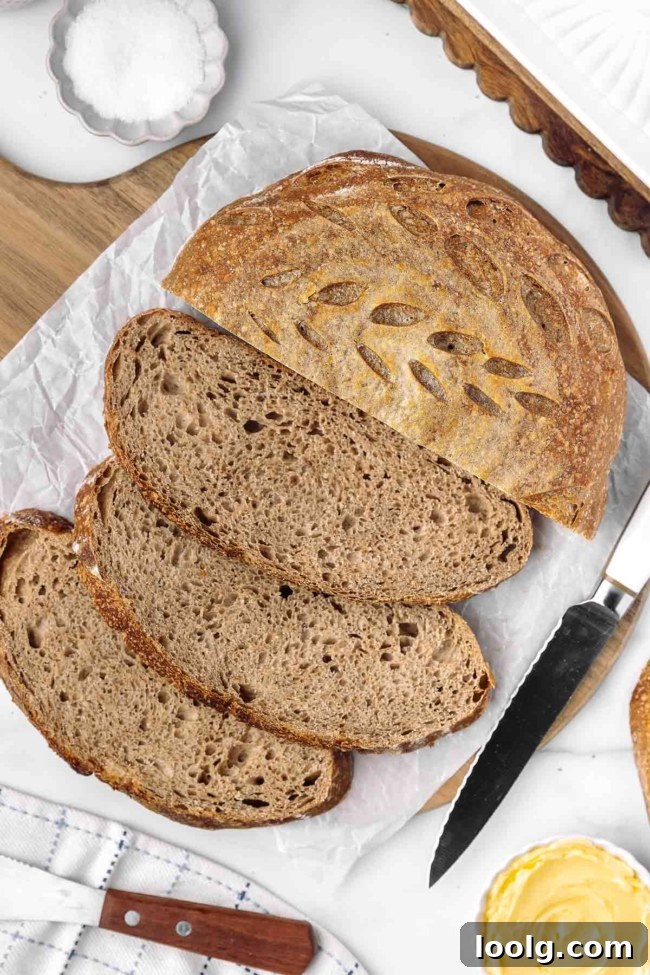
Gummy crumb: ensure the loaf reaches ~190°F (88°C) before removing the lid and finish to 205–210°F (96–99°C). Let it cool at least 2 hours before slicing.
Suggested Timeline
Sourdough timing varies with starter strength and room temperature. Use this schedule as a planning guide but follow dough cues for best results.
| Time | Activity |
|---|---|
| 10:00 AM | Build the levain; let it become active and bubbly (about 3–5 hours). |
| 1:30–2:30 PM | When levain is ready, mix dough and begin autolyse, then follow mixing steps. |
| 2:30–7:00 PM | Complete stretch-and-folds and bulk fermentation according to dough cues. |
| 7:00 PM | Preshape and final shape the dough. |
| 7:30 PM | Cover and refrigerate for cold proof. |
| 5:30–9:30 AM (next day) | Bake after ~10–14 hours cold proofing. |
Make Ahead & Storage
The overnight cold proof is built into the recipe: shape, refrigerate 10–14 hours, and bake directly from the fridge. Cool completely before storing. Keep the loaf at room temperature in a bread bag or breathable container up to three days. For longer storage, slice the cooled loaf and freeze in an airtight bag for up to three months; remove slices as needed and thaw or reheat gently.
What to Serve With Whole Wheat Sourdough
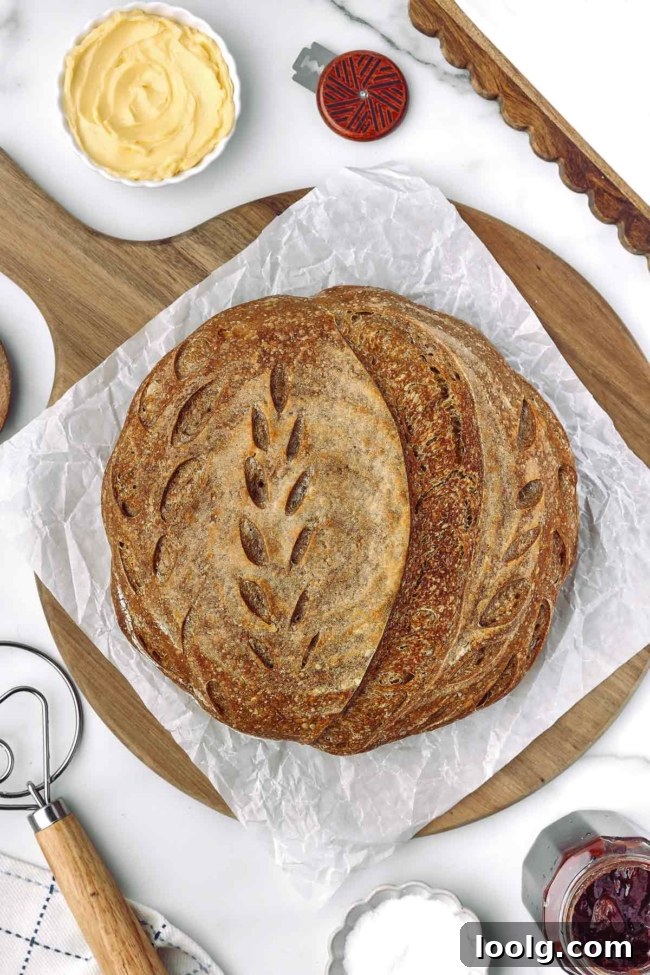
The hearty whole-wheat flavor pairs well with soups, stews and robust salads. Toasted slices are excellent for breakfast with butter, jam or eggs.
- Thick slices with creamy chowder or bean soup.
- Accompany potato-based or colcannon-style soups.
- For breakfast: toast and top with butter, jam, or savory spreads.
Have you tried this 50/50 Whole Wheat Sourdough Bread?
Share your results and notes — feedback helps refine the loaf for different flours and kitchens.
Whole Wheat Sourdough Bread — Recipe
Ingredients
Levain
- 25 g ripe 100% hydration sourdough starter
- 25 g bread flour
- 25 g whole wheat flour
- 50 g water
Dough
- 225 g bread flour
- 225 g whole wheat flour
- 350 g water (autolyse), plus up to 35 g additional water as needed
- 125 g ripe levain
- 11 g fine sea salt
Instructions
- Prepare the levain: Mix starter, bread flour, whole wheat flour and water until no dry flour remains. Cover and let it become bubbly and near peak (about 3–5 hours).
- Autolyse: Combine the bread and whole wheat flours with 350 g water in a large bowl. Mix until hydrated and rest, covered, for 30 minutes.
- Mix: After autolyse, add the ripe levain and incorporate by hand or with a stand mixer on low until cohesive. Let rest ~20 minutes.
- Add salt and water: Sprinkle in salt and gradually add up to 35 g additional water while mixing. Aim for a soft, tacky but cohesive dough. Stop adding water if the dough becomes overly loose.
- Rest: Cover and rest 30 minutes after final incorporation.
- Stretch-and-folds: Perform 3 sets of gentle stretch-and-folds spaced ~30 minutes apart. Add a fourth set only if the dough still lacks structure.
- Bulk fermentation: Continue until dough is aerated, puffy and shows bubbles along the sides. The dough should jiggle slightly when the bowl is moved.
- Preshape: Turn onto a lightly floured surface, form a loose round and rest uncovered about 20 minutes.
- Final shape & cold proof: Shape into a tight boule, place seam-side up in a well-floured 9–10 inch banneton, cover and refrigerate 10–14 hours.
- Bake: Preheat a covered Dutch oven to 475°F (245°C) for ~30 minutes. Turn the cold loaf onto parchment, score, place in the preheated Dutch oven, cover and bake 25 minutes. Check the center; once it reaches ~190°F (88°C), remove the lid, lower oven to 450°F (230°C) and bake uncovered 20–25 minutes until the interior is 205–210°F (96–99°C) and crust is deeply golden.
- Cool: Remove from oven and cool completely on a wire rack, at least 2 hours, before slicing.
Notes
- Flour strength and absorption vary. You may not need all of the extra water; add slowly and judge by feel.
- Do not wait for a strict doubling during bulk; use visual and tactile cues instead.
- Cold proof works well at 10–14 hours; significantly longer proofs increase overproof risk.
- Allow the loaf to cool fully before slicing to ensure a well-set crumb.
Estimated Nutrition (per slice)
Calories: 148 kcal • Carbohydrates: 31 g • Protein: 5 g • Fat: 1 g • Fiber: 3 g