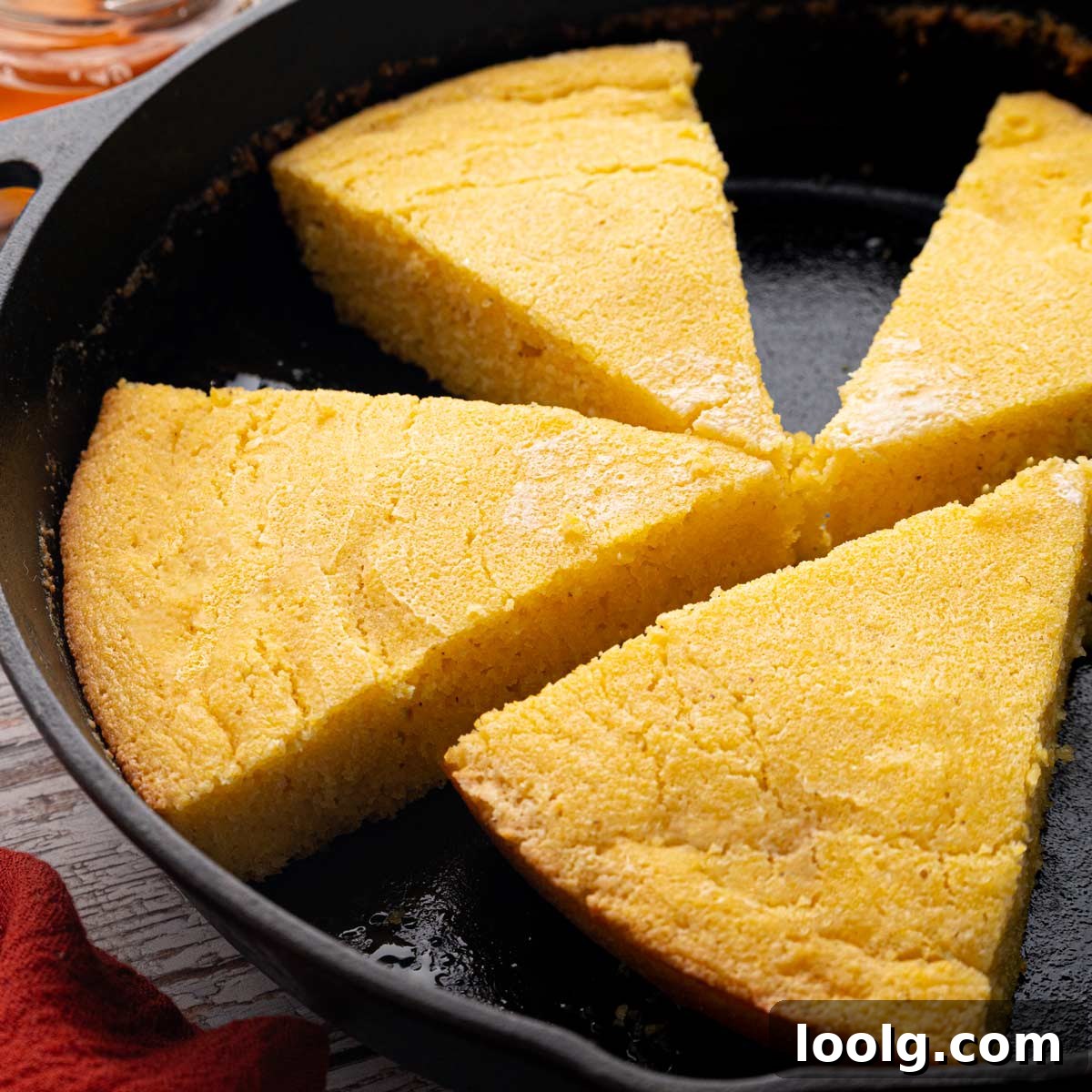
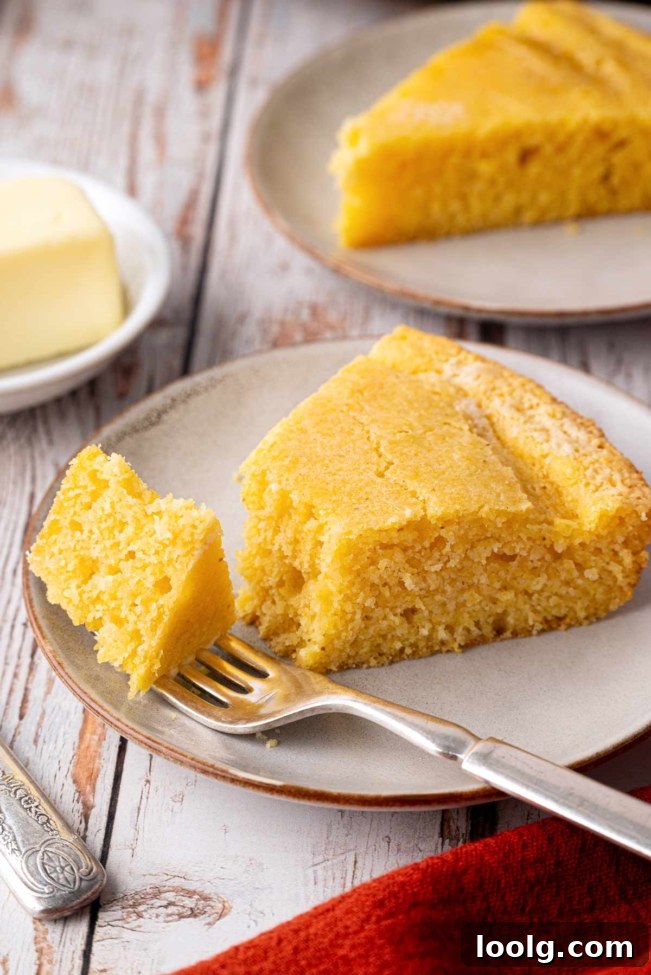
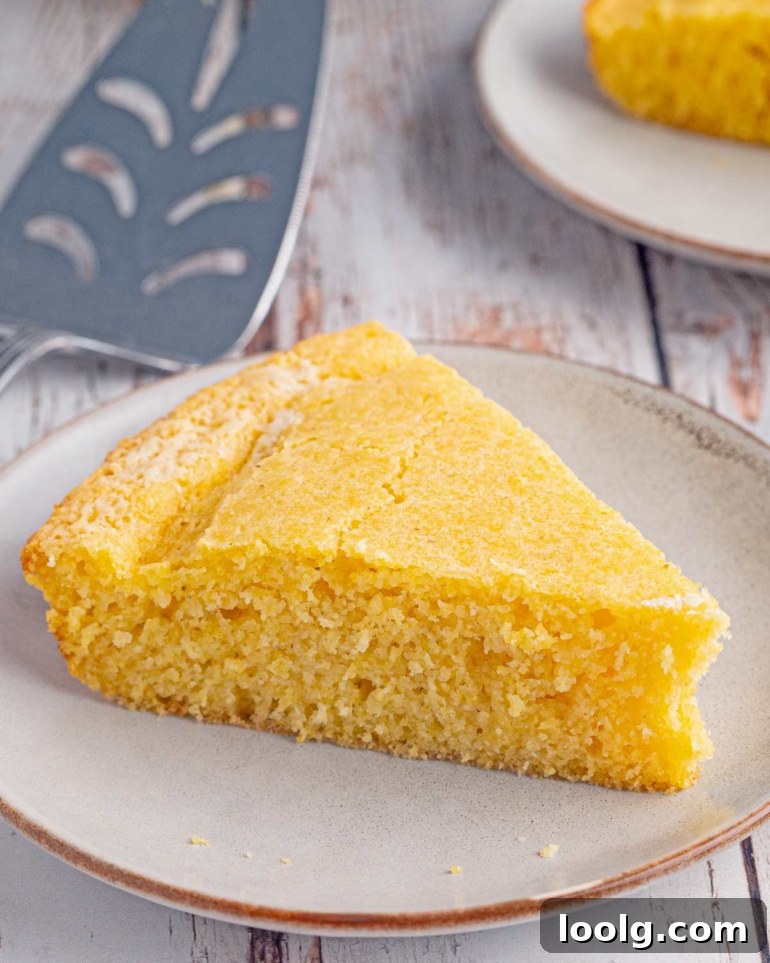
This sourdough cornbread bakes up with crisp, buttery edges and a tender, moist center, carrying a subtle tang from sourdough starter. It’s baked in a preheated cast iron skillet to develop a golden, slightly crunchy crust while keeping the interior soft.
You don’t need to feed your starter or wait for the batter to rise — baking powder gives the cornbread its lift, so you can use sourdough discard straight from the refrigerator. Buttermilk adds richness and moisture, and a touch of honey balances the corn flavor with a mild sweetness.
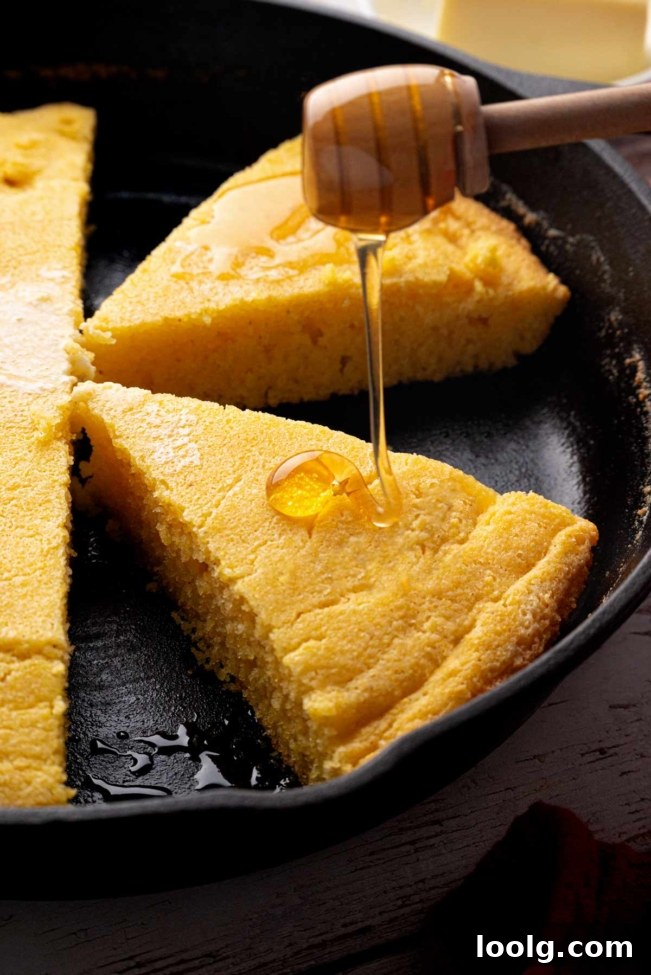
Serve it warm alongside chili, soup or barbecue, or enjoy a wedge with butter and honey for breakfast. There’s also a gluten-free variation that I’ve tested successfully using a brown rice and sorghum sourdough starter and a gluten-free measure-for-measure flour blend.
What’s to Love
- Uses plenty of discard – 200 grams of discard in one batch makes this a practical way to use excess starter.
- No bread-making skills required – no kneading, shaping or folding; just mix a batter.
- Freezer-friendly – cut into wedges and freeze individual portions for quick reheating later.
- Corn-forward flavor – with 200 grams of cornmeal and only 40 grams of added flour, this cornbread highlights cornmeal rather than being cake-like. If you prefer a lighter, cake-style cornbread, consider a different recipe suited to that texture.
Ingredients
Scroll down for the full recipe card. Below are notes on key ingredients and helpful substitutions.
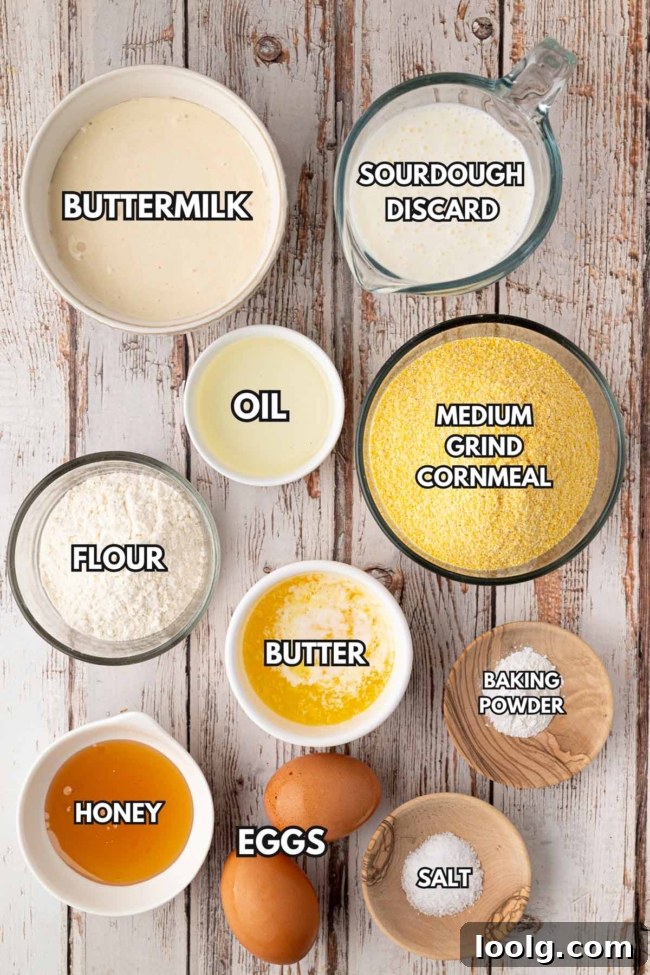
- Sourdough starter or discard – use 200 grams. It can be active or unfed, but weigh it rather than measuring by volume because consistency varies between starters.
- Cornmeal – this recipe uses medium-grind cornmeal. Weigh the 200 grams for accuracy; cup measures vary by brand.
- All-purpose or gluten-free flour – only 40 grams are needed. For a gluten-free version, a measure-for-measure blend with xanthan gum worked well in testing.
- Buttermilk – adds moisture and a little tang. If it’s very cold, let it warm slightly so melted butter doesn’t re-solidify when mixed.
- Honey or maple syrup – 2 tablespoons (40 grams) for a mild sweetness that complements savory and sweet toppings alike.
- Butter and oil – both appear in the batter, with extra butter reserved for the hot skillet to create a rich crust.
How to Make the Gluten-Free Version
I tested a gluten-free variation with two ingredient swaps:
- Gluten-free sourdough starter – 200 grams of a starter fed with a 50/50 blend of brown rice flour and sorghum flour.
- Gluten-free flour blend – replace the 40 grams of all-purpose flour with 40 grams of a measure-for-measure gluten-free flour that already contains xanthan gum.
If you need the cornbread to be gluten-free, ensure your cornmeal and other packaged ingredients are labeled gluten-free and that the sourdough starter is made from gluten-free flours. Substituting only the all-purpose flour won’t make the recipe safe if your starter contains wheat.
Results will vary depending on the flour blend, hydration and behavior of the gluten-free starter, so expect minor texture differences between different starters and blends.
How to Make It
This is a quick batter-style cornbread — it does not require proofing like a loaf of sourdough. You’ll need two mixing bowls and a 10-inch (25-cm) cast iron skillet for the best crust and texture.
- Preheat the skillet: Place a 10-inch (25-cm) cast iron skillet in a cold oven and preheat to 425°F (220°C), leaving the skillet in the oven as it heats.
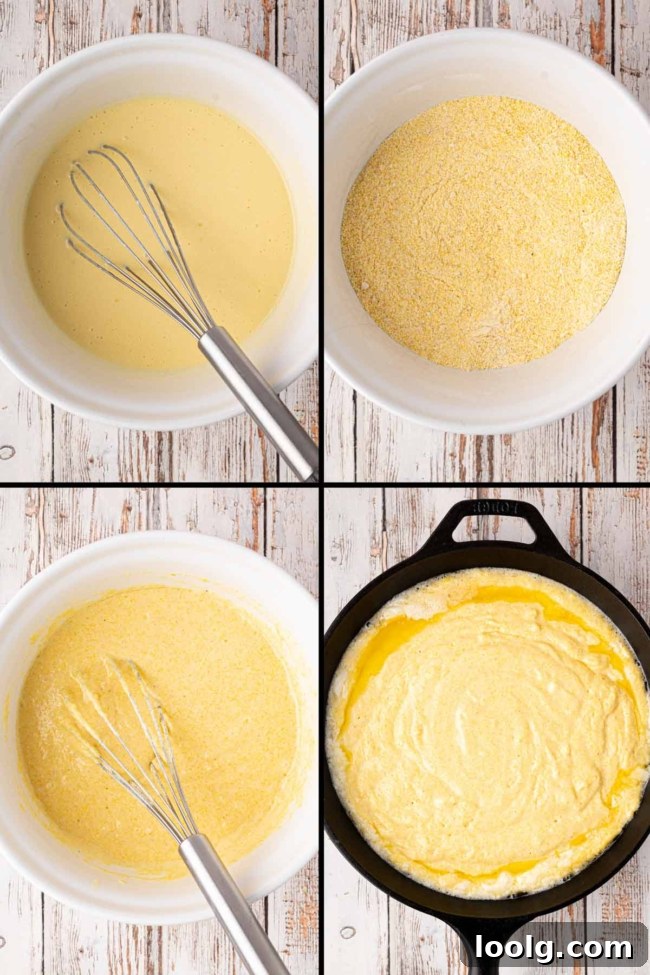
- Mix the wet ingredients: In a large bowl, whisk together the sourdough starter or discard, eggs, melted butter, oil, honey or maple syrup, and buttermilk until smooth and combined.
- Mix the dry ingredients: In a separate bowl, whisk the cornmeal, flour, baking powder and salt. Pour the wet mixture into the dry and stir just until no dry streaks remain. Avoid overmixing.
- Prepare the skillet: Carefully remove the hot skillet from the oven and add the remaining 2 tablespoons of butter, swirling to coat the bottom and sides. Immediately pour in the batter so the butter doesn’t burn.
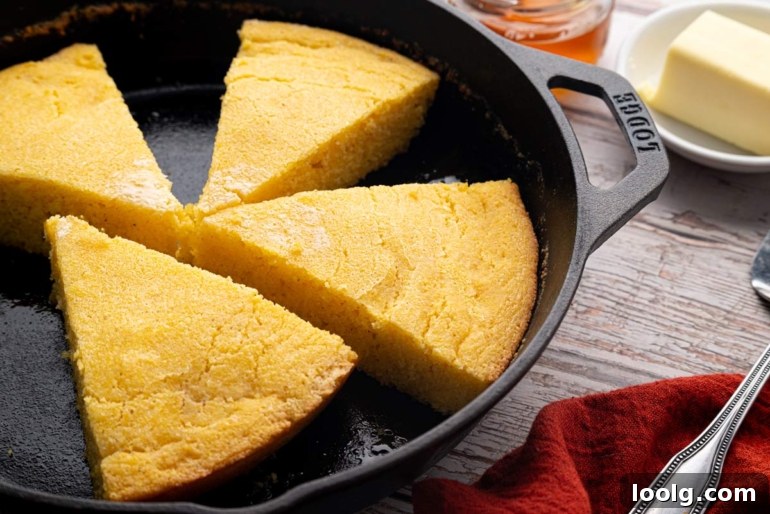
- Bake: Return the skillet to the oven and reduce the temperature to 375°F (190°C). Bake 20–25 minutes, until the top is golden and the center is set. A toothpick should come out clean or with a few moist crumbs. The internal temperature should reach about 200–205°F (93–96°C) if you use an instant-read thermometer.
- Cool and serve: Let the cornbread cool in the skillet 8–10 minutes, then cut into wedges and serve warm.
Tips for Success
- Be ready before you remove the skillet: Have the batter mixed and a heat-safe surface ready. The butter will sizzle on the hot pan, so don’t be measuring at that moment.
- Bake on the middle rack: Cast iron holds heat; placing it too close to the bottom element can over-brown the underside.
- Check doneness in the center: The edges may brown sooner than the middle. If the center looks wet or the toothpick shows batter, continue baking a few more minutes.
Can You Make It Without a Cast Iron Skillet?
A 9-inch (23-cm) square metal baking pan has a similar surface area and may be used as an alternative, though crust and baking time can differ. If preheating a metal pan at 425°F (220°C) is safe for your pan, you can try the same method and monitor the center for doneness.
Avoid preheating glass or ceramic dishes empty; the thermal shock of adding cold batter to a hot dish can cause cracking. Instead, grease a room-temperature glass or ceramic dish and bake at 375°F (190°C), allowing additional time as needed.
Make Ahead & Storage
The cornbread is best the day it’s baked when the edges are crisp, but leftovers store and reheat well.
- Room temperature: Cool completely and store in an airtight container for up to 2 days.
- Refrigerator: Keep in an airtight container for up to 5 days.
- Freezer: Wrap cooled wedges individually and store in a freezer-safe bag or container for up to 3 months for best quality.
- Reheating: Microwave a wedge for 15–30 seconds, or reheat in a 325°F (165°C) oven for 8–12 minutes for crispier edges. A skillet over low heat also restores crispness.
Allow cornbread to cool completely before wrapping to avoid trapping steam and sogginess. Frozen wedges thaw overnight in the refrigerator before reheating.
What to Serve With Sourdough Cornbread
- Classic mild chili or hearty soups — great for spooning over a warm wedge of cornbread.
- Smoked or roasted meats for a barbecue-style meal or holiday sides.
- Smoked baked beans — the sweet-smoky flavors pair especially well with buttery cornbread.
For simpler serving, warm cornbread with salted butter or honey butter. Leftover wedges are excellent toasted for breakfast, and slightly stale cornbread can be transformed into stuffing or croutons.
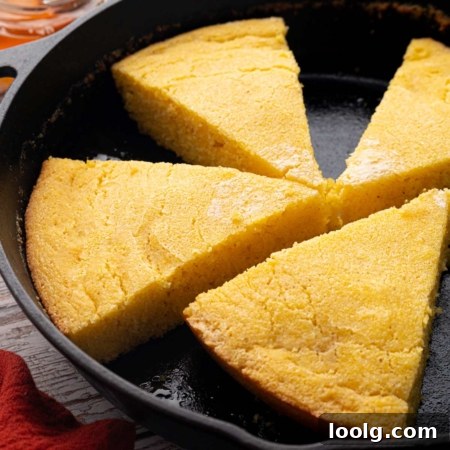
Sourdough Cornbread
Erin Dooner
Bread, Side Dish
American
8
15 mins
25 mins
50 mins
Ingredients
Cornbread:
- 200 grams sourdough starter or discard (weigh for accuracy)
- 2 large eggs, preferably room temperature
- 1/4 cup (57 grams) unsalted butter, melted and slightly cooled
- 2 tablespoons olive oil (or vegetable or canola oil)
- 2 tablespoons (40 grams) honey or maple syrup
- 3/4 cup + 1 tablespoon (200 grams) buttermilk
- 200 grams medium-grind cornmeal (about 1 1/3 cups, depending on brand)
- 1/3 cup (42 grams) all-purpose flour (or gluten-free measure-for-measure flour)
- 2 teaspoons baking powder
- 1 teaspoon kosher salt
For the skillet:
- 2 tablespoons (28 grams) unsalted butter
Instructions
- Place a 10-inch (25-cm) cast iron skillet in a cold oven and preheat to 425°F (220°C), leaving the skillet inside as the oven heats.
- In a large bowl, whisk together the sourdough starter or discard, eggs, melted butter, oil, honey or maple syrup, and buttermilk until evenly combined.
- In a separate bowl, whisk the cornmeal, flour, baking powder and salt. Pour the wet ingredients into the dry and stir just until combined; do not overmix.
- Carefully remove the hot skillet from the oven, add the remaining 2 tablespoons (28 grams) of butter and swirl to coat the bottom and sides. Immediately pour in the batter.
- Return the skillet to the oven and reduce the temperature to 375°F (190°C). Bake 20–25 minutes, until the top is golden and a toothpick comes out clean or with a few moist crumbs. Internal temperature should be around 200–205°F (93–96°C).
- Let cool in the skillet for 8–10 minutes, then cut into 8 wedges and serve warm.
- Store airtight at room temperature up to 2 days, refrigerated up to 5 days, or freeze wrapped wedges up to 3 months. Reheat in the microwave briefly or in a 325°F (165°C) oven for crispier edges.
Notes
- Sourdough starter: Use 200 grams of 100% hydration starter or discard. Measure by weight, not volume.
- Gluten-free option: Tested with a gluten-free starter fed on brown rice and sorghum flours and a measure-for-measure gluten-free flour in place of the all-purpose flour. Make sure all ingredients are labeled gluten-free if needed.
- Nutrition info included in some recipe cards is an estimate. For precise nutrition facts, consult a professional or use a nutrition calculator.
Share your results and tag the recipe author on social media if you like to connect with others who make this often.