
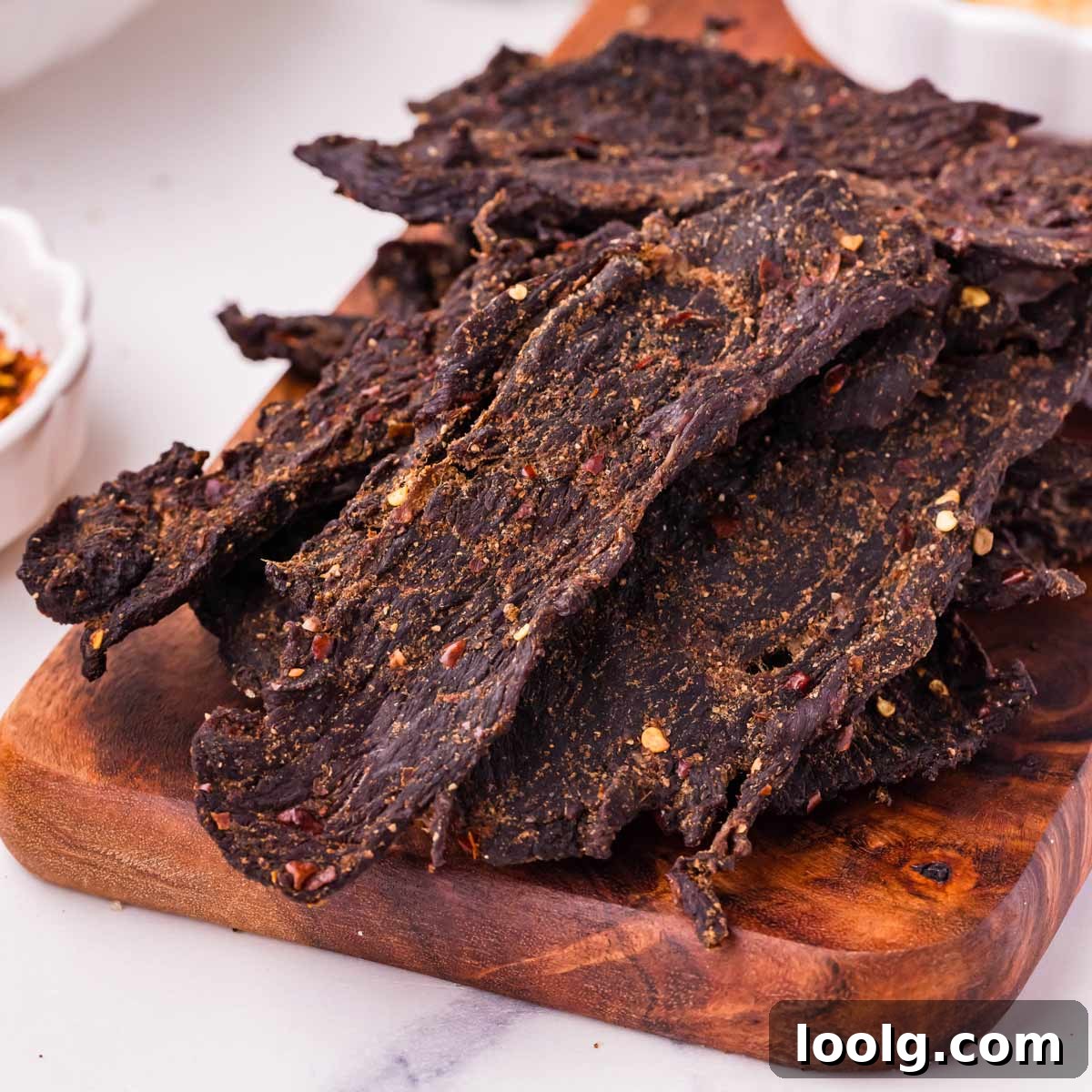
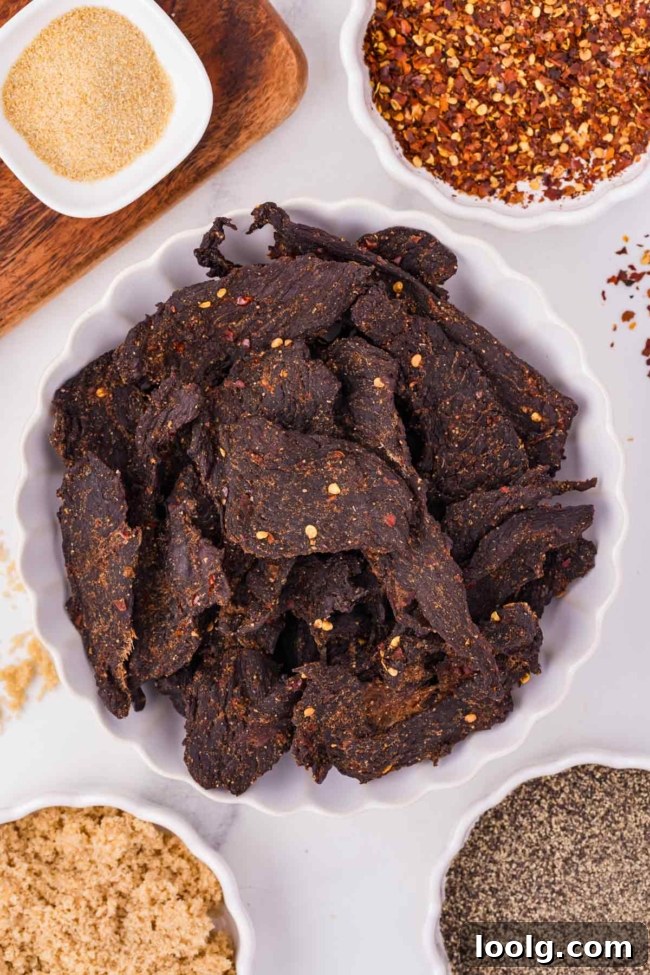
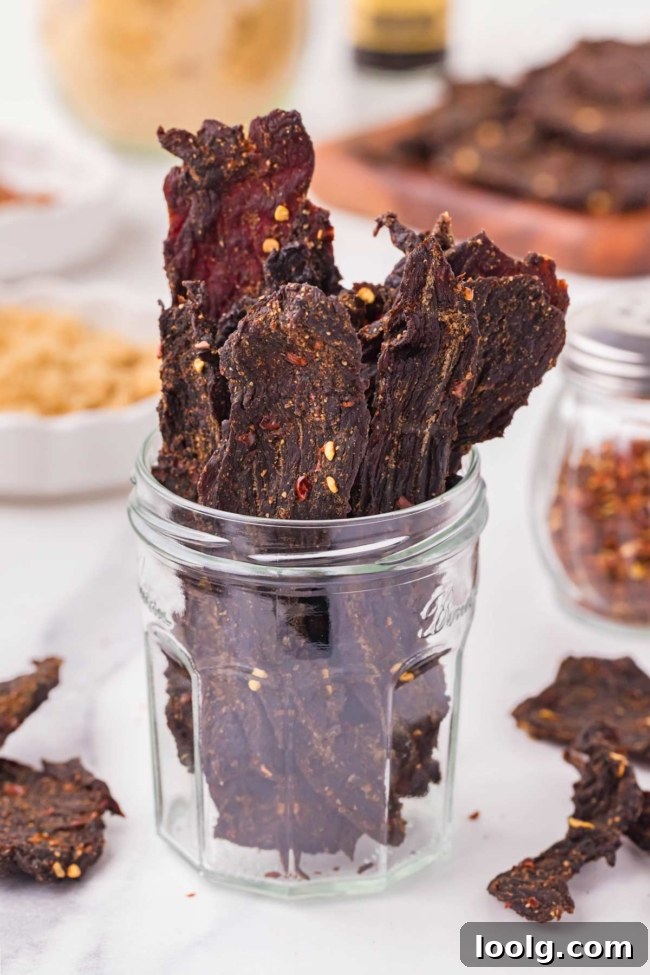
Venison jerky is a flavorful, chewy snack with smoky spices, a touch of sweetness and just enough heat to be interesting. A marinade of Worcestershire and soy sauce gives deep savory notes without masking the natural flavor of the venison. You can easily tweak the sugar and spice levels to suit your preference.
This version is based on a long-standing family recipe that has been adjusted over time for a milder, kid-friendly spice level. It’s an excellent way to use lean hindquarter cuts from the freezer—top round, bottom round, eye of round and similar muscles work particularly well. When finished, jerky is a high-protein snack that stores well in the refrigerator or freezer for quick bites later.
If you’ve never made jerky before, don’t worry. Below you’ll find clear guidance on slicing for your preferred texture, how to judge proper dryness and how to prevent uneven drying. The method also includes a simple 10-minute oven step after dehydrating to improve food safety, since dehydration alone may not reliably eliminate all bacteria.
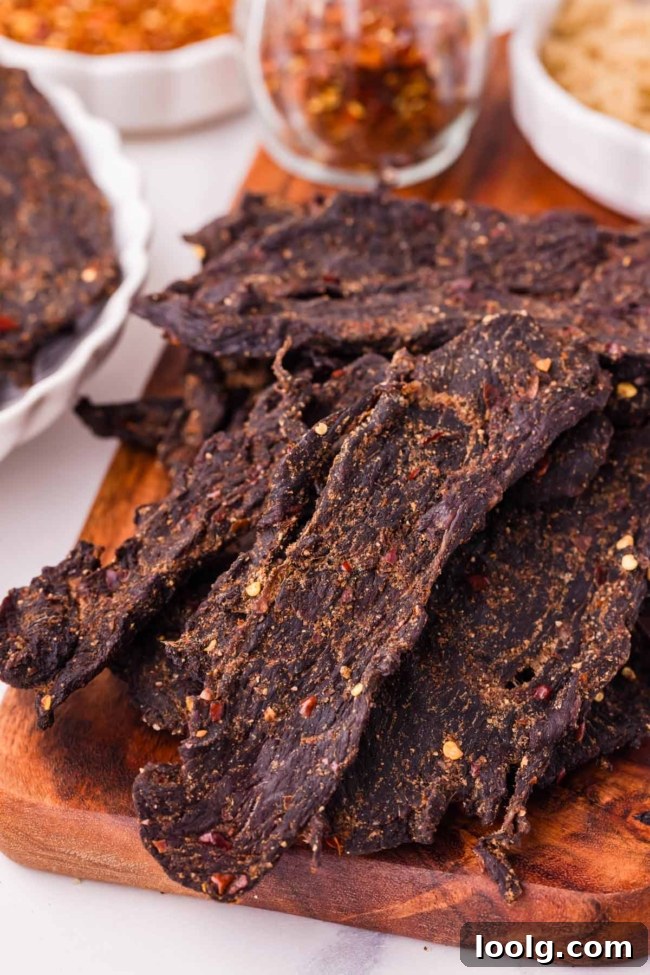
What’s to Love
- Ideal for lean cuts – especially hindquarter muscles such as top round, bottom round and eye of round.
- Adjustable sweetness – omit the brown sugar for a savory version, or add a bit for a touch of sweetness.
- Family-friendly heat – the base recipe is mildly spiced, with an easy option to increase heat.
- Make ahead – jerky stores well chilled or frozen for convenient snacks.
- No smoker required – smoked paprika supplies a smoky flavor when using a dehydrator or oven.
Ingredients
Scroll to the recipe section for full measurements. Notes on key ingredients are below.
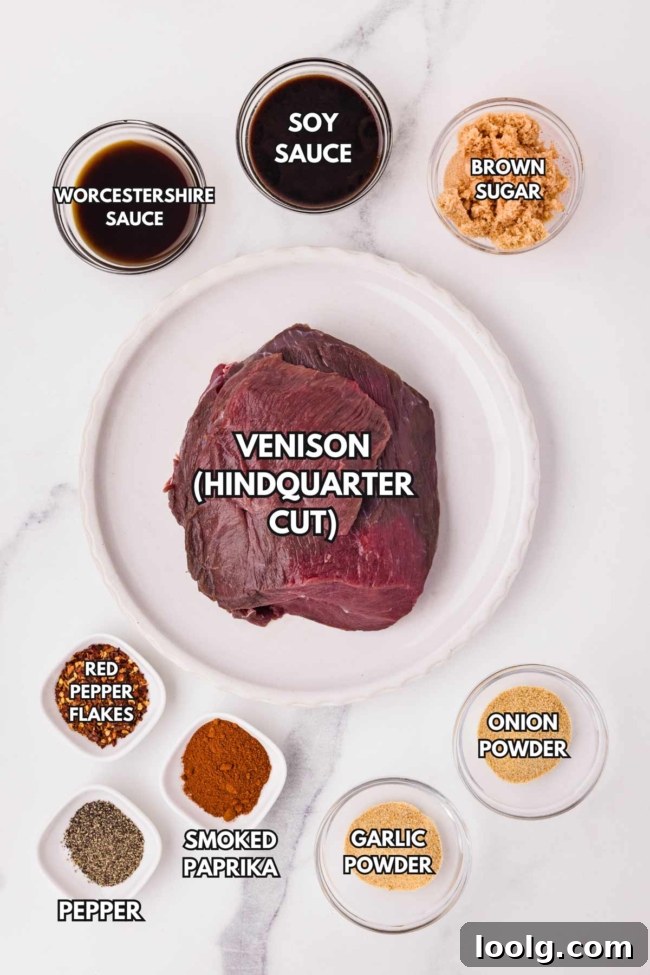
- Venison – 2 to 2 1/2 pounds (907–1134 g) trimmed, lean venison. Use whole-muscle cuts (not ground). Remove visible fat, silver skin and connective tissue—fat shortens shelf life and can become rancid.
- Worcestershire sauce – adds savory, slightly tangy depth to the marinade.
- Soy sauce – provides the primary salt and umami; liquid aminos can substitute 1:1 if preferred.
- Light brown sugar – about 3 tablespoons (38 g) for a balanced hint of sweetness. Omit for a fully savory jerky or increase to 1/4 cup (50 g) for a sweeter result.
- Seasonings – onion powder, garlic powder, smoked paprika and coarsely ground black pepper create savory, smoky notes.
- Crushed red pepper flakes – 1 1/2 teaspoons yields mild heat suitable for most families. Increase to 1 tablespoon for a noticeably spicier jerky.
How to Make It
Making venison jerky follows a few straightforward steps: trim and slice the meat, mix the marinade, marinate the strips, dehydrate, then finish with a brief oven treatment for added safety. Below is an overview followed by detailed steps.
1. Trim and Slice the Venison
Trim away all visible fat, silver skin and connective tissue. A sharp, flexible knife (similar to a fillet knife) is ideal for removing silver skin without wasting meat. Identify the grain of the muscle: for more tender jerky, slice across the grain; for chewier jerky, slice with the grain.
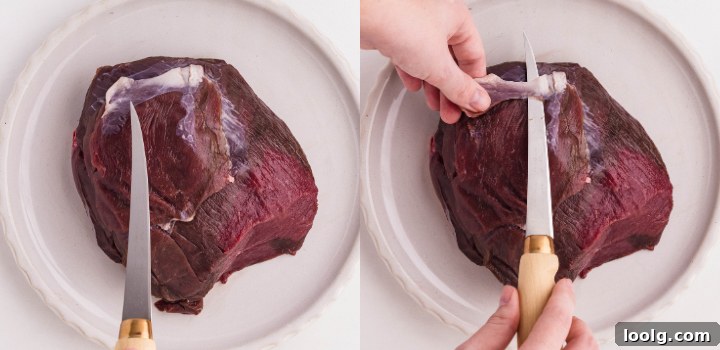
Cut uniform strips about 1/8–1/4 inch (0.3–0.6 cm) thick. Uniform thickness ensures even drying and simplifies the required post-dehydration oven treatment. If the meat is hard to slice thinly, chill it in the freezer for 30–60 minutes until firm but not frozen solid.
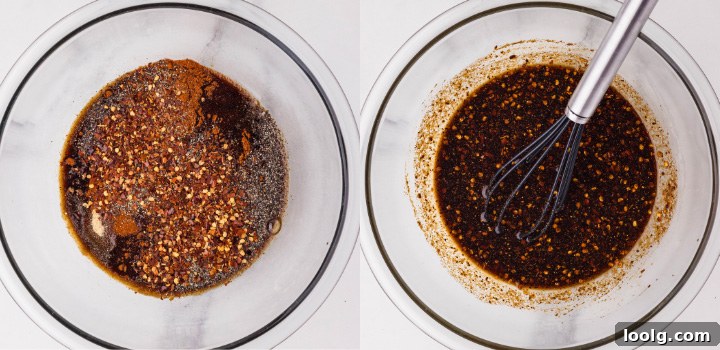
2. Mix the Marinade
In a large bowl, whisk Worcestershire sauce, soy sauce, brown sugar, onion powder, garlic powder, smoked paprika, black pepper and crushed red pepper flakes until the sugar is mostly dissolved and the seasonings are evenly distributed.
3. Marinate the Venison
Add the sliced venison to the marinade and toss to coat every strip. Cover and refrigerate for at least 8 hours and up to 24 hours, turning the meat occasionally so all pieces contact the marinade. Alternatively, marinate in a gallon zip-top bag with excess air pressed out for better contact.
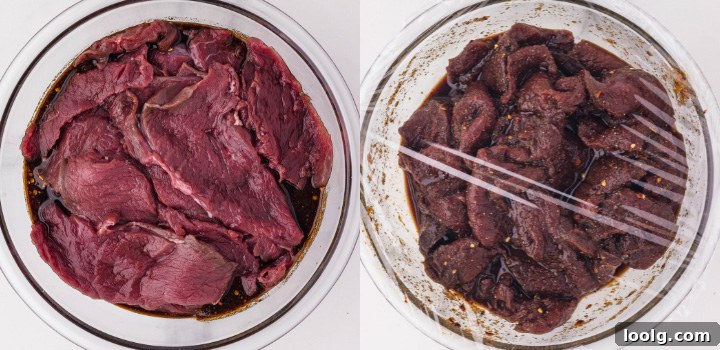
4. Drain and Arrange the Strips
Drain the marinated venison and discard the used marinade. Let excess liquid drip off and, if desired, pat strips lightly with paper towels. Arrange strips in a single layer on dehydrator trays, leaving space for air circulation and avoiding overlap.
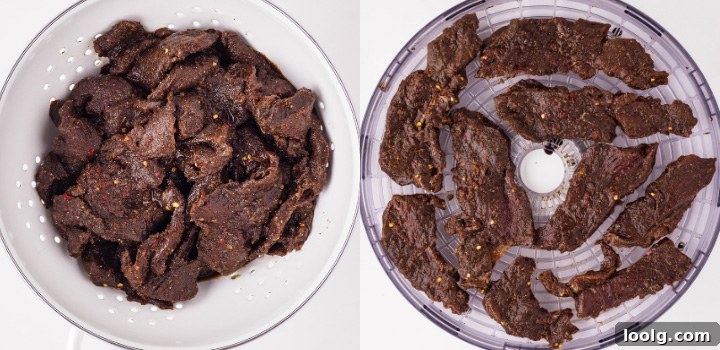
5. Dehydrate the Venison
Use a temperature-controlled dehydrator set to 140°F (60°C). Drying time varies with strip thickness, humidity and airflow. Expect anywhere from about 10 to 24 hours at 140°F for meat not heated before drying. Start checking strips as they dry and remove finished pieces. Rotate trays if your dehydrator has uneven airflow.
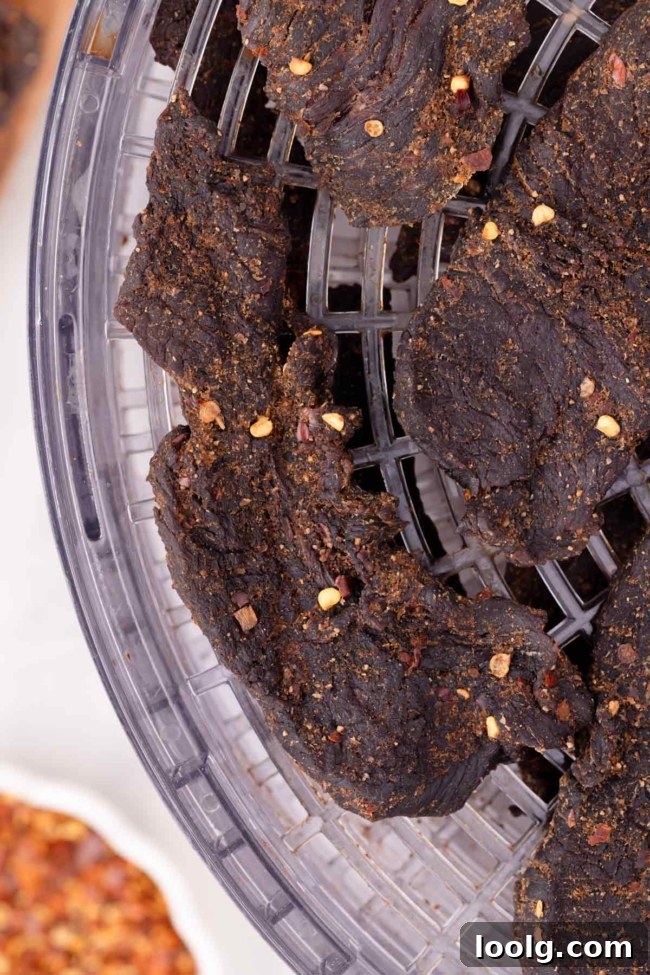
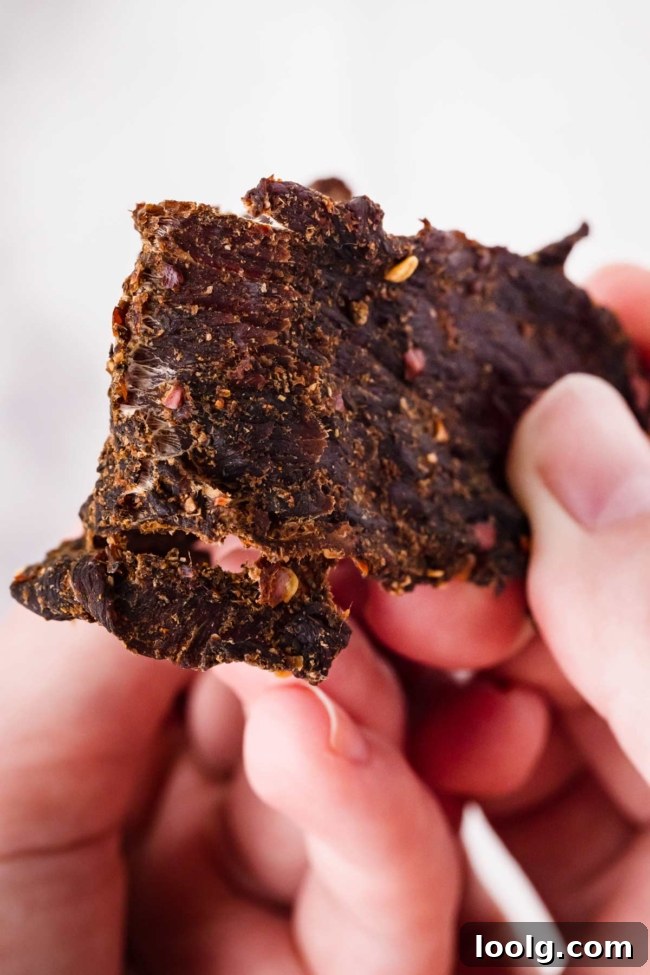
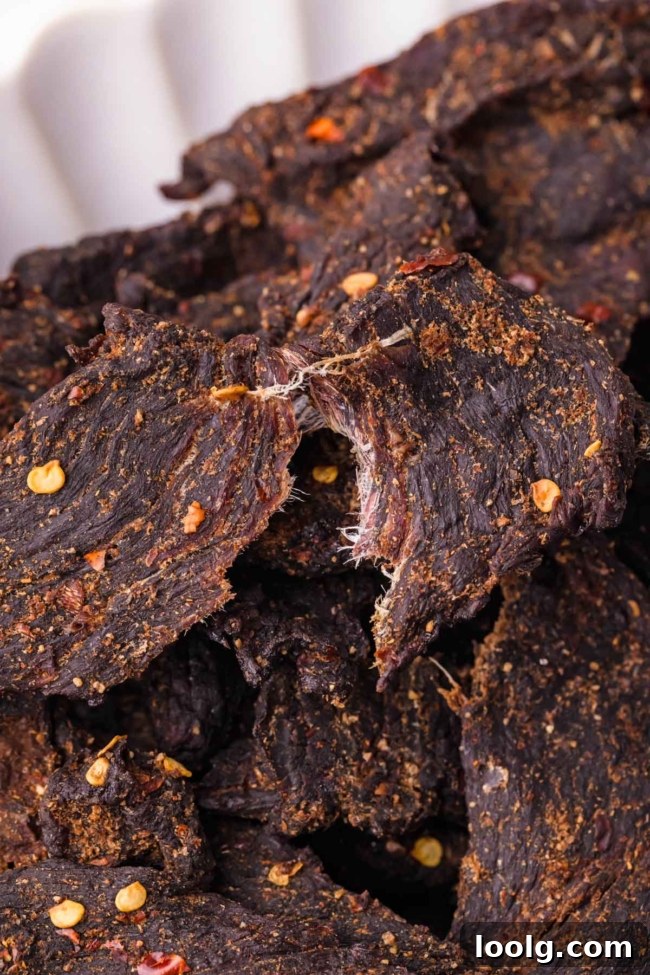
To test dryness, allow a strip to cool to room temperature, then bend it gently. Properly dried jerky will bend and form small surface cracks with fibers starting to separate but should not snap cleanly in two. If it bends without cracking or feels moist inside, continue drying and recheck later.
6. Heat the Jerky in the Oven
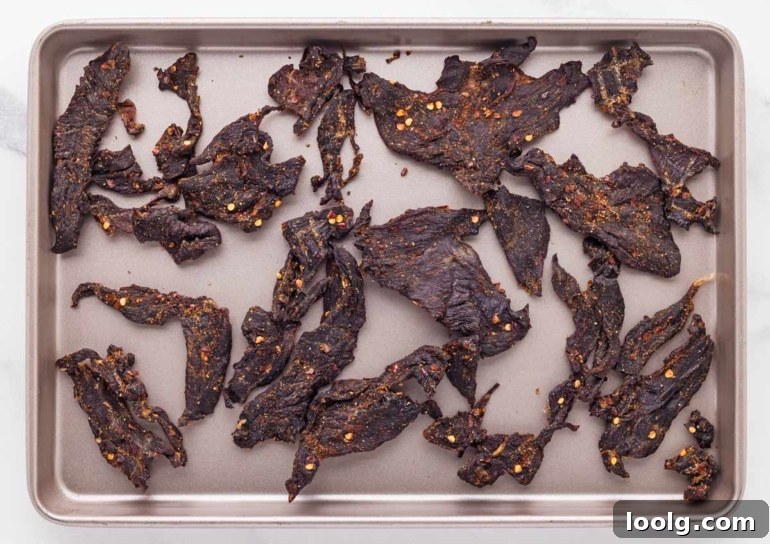
After dehydrating, preheat the oven to 275°F (135°C). Place the dried strips on a baking sheet in a single layer, not touching. Heat for 10 minutes in a fully preheated oven as an added food-safety step. This practice follows home food preservation guidance for strips sliced no thicker than 1/4 inch (0.6 cm) and does not noticeably change texture.
7. Cool and Store
Cool the jerky completely before transferring to airtight containers or vacuum-sealed bags. Refrigerate for short-term use (1–2 weeks recommended) or freeze for longer storage. If freezing, portion into meal-sized bags or vacuum-seal to make thawing only what you need easy.
Tips for Success
- Sharp, flexible knife: makes trimming and thin slicing easier.
- Uniform thickness: ensures even drying; uneven strips can require extra drying time and separate oven treatments.
- Partially freeze before slicing: firmer meat slices more cleanly.
- Don’t overcrowd trays: leave space for air to circulate around each strip.
- Rotate trays if needed: some dehydrators dry unevenly.
- Cool before testing: cooled jerky gives a more reliable feel for doneness than warm pieces.
Troubleshooting
Do you need curing salt?
This recipe does not use curing salt. It relies on dehydration followed by a brief oven treatment. Follow recommended temperature, thickness and drying instructions carefully and store the finished jerky refrigerated or frozen rather than assuming it is shelf-stable.
Why is my jerky still soft?
Common causes are slices that are too thick, uneven slicing, overcrowded trays or poor airflow. Let a test strip cool before judging; warm jerky feels softer. If it remains moist inside or bends without cracking, continue dehydrating.
Why is my jerky tough?
Venison is very lean and can be chewy. Tough jerky often results from slicing with the grain, cutting strips too thick, or over-drying. For more tender jerky, slice against the grain and aim for about 1/8 inch (0.3 cm) thickness.
Do I need to flip strips while dehydrating?
Not usually. Most dehydrators circulate air sufficiently if strips are laid out in a single layer. If your unit has uneven airflow, rotate trays partway through drying.
Can you marinate too long?
Stick to 8–24 hours in the refrigerator. Longer marinating in a salty mixture can make the jerky too salty and may alter texture.
How much jerky does 2 pounds of venison make?
Expect a substantial weight reduction after drying. Approximately 2 pounds (907 g) of trimmed raw venison typically yields around 3/4–1 pound (340–454 g) of finished jerky, though yield varies with starting moisture and drying thoroughness.
Make Ahead & Storage
Make ahead: You can slice the meat and prepare the marinade in advance. Keep the combined meat refrigerated for 8–24 hours before drying.
Refrigerate: Cool properly heat-treated jerky completely, then store in airtight containers. For a conservative approach, refrigerate and use within 1–2 weeks.
Freeze: Fully cooled jerky can be frozen in airtight bags or vacuum-sealed packages for long-term storage—up to two years in a well-sealed freezer package. Portion before freezing for easy thawing.
Refrigeration or freezing provides the best storage quality. Do not assume homemade jerky is shelf-stable unless it has been processed and dried according to tested guidelines.
More Venison Recipes
If you have extra venison, consider these other preparations:
- Venison chili – a hearty chili with ground venison, beans and tomatoes.
- Venison hamburger-style skillet – a comforting pasta or skillet meal using ground venison and cheese.
- Venison burgers – seasoned ground venison formed into patties and cooked in a skillet or on the grill.
- Venison casserole – a baked pasta casserole that stretches ground venison into a family meal.
- Venison tenderloin – seared and finished with butter and herbs for a special dinner.
Have you tried making venison jerky? Do you prefer mild or spicy, sweet or savory? Share your experience and adjustments to the basic recipe.
Venison Jerky
Author: Erin Dooner
Course: Snack
Cuisine: American
Servings: 16
Prep Time: 20 mins
Cook Time: 10 hrs 10 mins (dehydrating time varies)
Total Time: Approximately 18 hrs 30 mins (including marinating and drying)
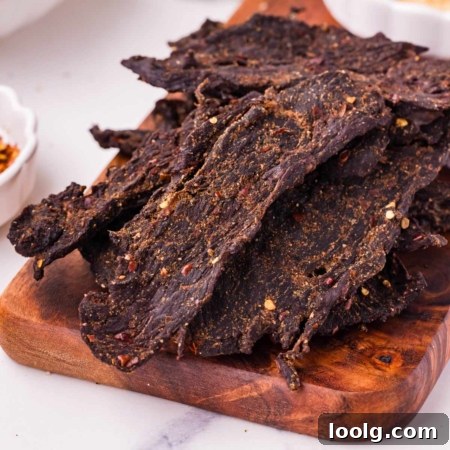
This homemade venison jerky uses lean deer meat marinated in Worcestershire and soy sauce with brown sugar and smoky spices. Adjust heat and sweetness to taste, dehydrate, then finish with a brief oven treatment.
Ingredients
- 2–2 1/2 pounds (907–1133 g) boneless, lean venison, trimmed and sliced
- 1/2 cup (118 ml) Worcestershire sauce
- 1/2 cup (118 ml) soy sauce (or liquid aminos)
- 3 tablespoons packed light brown sugar (optional)
- 1 tablespoon onion powder
- 1 tablespoon garlic powder
- 2 teaspoons smoked paprika
- 1 1/2 teaspoons coarsely ground black pepper
- 1 1/2 teaspoons crushed red pepper flakes (adjust to taste)
Instructions
- Remove all visible fat, silver skin and connective tissue. Slice venison into uniform strips 1/8–1/4 inch (0.3–0.6 cm) thick. For more tender jerky, slice against the grain; for chewier jerky, slice with the grain.
- Whisk Worcestershire sauce, soy sauce, brown sugar, onion powder, garlic powder, smoked paprika, black pepper and crushed red pepper flakes until mostly combined.
- Add the venison strips and toss to coat. Cover and refrigerate for 8–24 hours, turning occasionally.
- Drain the venison and discard the marinade. Pat strips dry if desired and arrange in a single layer on dehydrator trays without overlapping.
- Set a temperature-controlled dehydrator to 140°F (60°C). Dehydrate until strips are dry to the bend test. Drying time will vary; expect roughly 10–24 hours at 140°F depending on conditions.
- Let a test strip cool and bend it gently. Proper jerky will bend, show small surface cracks and separate slightly along fibers without snapping in two.
- Preheat the oven to 275°F (135°C). Arrange dried strips on a baking sheet in a single layer and heat for 10 minutes as a post-drying safety step.
- Cool completely, then store in airtight containers. Refrigerate for short-term use (1–2 weeks) or freeze for long-term storage (up to 2 years when vacuum-sealed).
Notes
- Timing is based on 8 hours marinating and roughly 10 hours dehydrating; dehydrating may take longer in some setups.
- Liquid aminos can replace soy sauce at a 1:1 ratio.
- Omit or adjust brown sugar for sweeter or fully savory jerky.
- Adjust crushed red pepper flakes to change heat level.
- Use gluten-free soy sauce and Worcestershire sauce for a gluten-free option.
Nutrition (estimate)
Serving: 1 ounce (28 g) — Calories: 109 kcal; Protein: 17 g; Carbohydrates: 5 g; Fat: 2 g; Sodium: 557 mg. Nutritional values are approximate.
Tried this recipe?
Share your results and any tweaks you made—mild, spicy, sweet or savory.